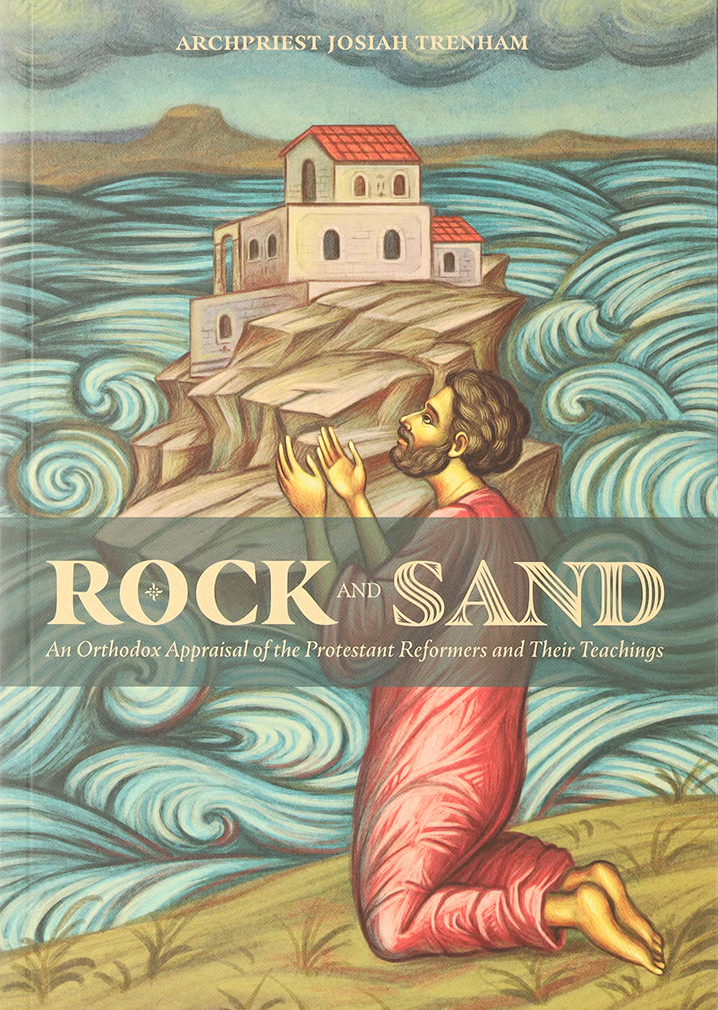
I first picked up Rock and Sand because I wanted a perspective on the Reformation that wasn’t shaped by the internal debates between Protestants and Roman Catholics. Since Orthodoxy wasn’t directly involved in the Reformation, its voice felt like a chance to step outside the usual categories and see the landscape more clearly.
At that point in my journey, I was hungry for real church history. I wanted to understand where my own faith tradition came from, and how it related to historic Christianity. Trenham’s book introduced me to categories I had never encountered — the magisterial and radical reformations — and suddenly the map of Protestantism made more sense.
What surprised me most was realizing how much of my tradition was shaped by more recent movements in American religious history: the Great Awakenings, revivalism, and the rise of Pentecostalism. Trenham helped me see how these movements influenced the denominations I grew up around, and why Protestantism looks the way it does today.
Some Orthodox writers even describe the papal break as the first major departure from conciliar authority (or, to say it in a tongue-in-cheek manner: The pope was the first protestant). While that language can sound jarring at first, Rock and Sand helped me understand the perspective behind it: that any shift away from the faith as they believe it was handed down by the apostles represents a kind of self‑authorizing innovation. From that vantage point, the wide variety of later Christian movements — from Roman Catholic developments to Protestant denominations to newer groups — can be seen as different expressions of that same pattern.
But Rock and Sand didn’t strike me as polemical. It was unapologetically Orthodox, yet it felt more like someone handing me a historical map I didn’t know I needed. It helped me understand not just Orthodoxy, but my own tradition — where it came from, what shaped it, and why it differs from the ancient Christian world as Orthodoxy understands it.
Click the button below to see the book, or check out the two-part interview of Fr. Josiah Trenham by Kevin Allen.

Leave a Reply